The other day, Lydia (2) uttered a string of gibberish that was kind of elegant and thoughtful, such that it actually sounded like a real language. I turned to Nathan and joked, "It sounds like she's speaking Elvish!"
Of course, Josie (6) jumped on the comment and had to ride it all the way home - What did I mean? What language is Elvish? Did Lydia really speak it? Etc, etc.
In the course of the conversation, we hit a major impasse. I explained that Elvish was the made-up language spoken by the Elves in The Lord of the Rings.
"Oh," she chuckled - "and they probably sound pretty funny, huh."
"Well, not really." I said. "The elves in the Lord of the Rings are very wise and serious, and their language is smooth and flowing and lovely."
Josie - (slowly computing) - "But - elves are funny."
"Well, not THESE elves."
We talked and talked, but it didn't seem to matter how long we described Tolkien's elves.
Josie, by no fault of her own, was very accustomed to only one type of elf. She was probably picturing funny little men with pointy ears and pointy hats fashioning Christmas toys for Santa. It was as if Josie could not fathom an elf that didn't fit into her already established criteria for elf-dom.
And because of that fundamental breakdown, the whole conversation was lost. The word "elf" meant something different to Josie than it did to us. We were stuck.
I think adults are a little bit like that, too.
Words are such a gift, and yet they can be so tenuous. A word can have many different definitions and still more connotations, so that to the speaker or the hearer, there could be hundreds of plausible interpretations based on the arrangement and delivery (and context, and audience, and speaker) of a given word.
I think this is where we can tend to get hung up when looking at Orthodoxy.
We're coming at these things from different angles. We come with different definitions, different expectations, and different experiences that shape the way we see these words. So when someone talks about "praying to the Saints," for example, we immediately have ONE definition of "prayer," ONE definition of "Saints," and a whole host of personal or historical baggage about what this phrase must mean.
So we march on, trying to defend our position (because, after all, "Elves are funny!"...and "Praying to dead people who aren't God in any way shape or form doesn't make any sense!") - and there is a disconnect. We can't go forward, because we are using the same words to talk about completely different things, but we can't seem to land on the problem. So we scoot away from the issue entirely, never bothering to learn what kind of elves may have been in Tolkien's imagination. We are absolutely wrapped up in the ones in ours.
In "The Illumined Heart," Frederica Matthews-Greene writes, "The Western Christian who begins to explore these things faces a difficult entry phase. Our worldview is very different from this one, and sometimes we use the same words but mean different things. We can also encounter entirely unfamiliar words. In general, we will have the disorienting sensation that things we always presumed were distinct and separate are being put back together. This whole process will take some patience."
I work with high school aged exchange students coming to America. When they come, I talk to them about culture shock. I talk to them about how hard it may be for them at first, and some common symptoms or pitfalls they may experience as they try to integrate into their new cultural setting. This may sound disheartening, but I tell them that it's far better to be able to look culture shock in the eye and to deal with it than to get swept along unknowingly by its tumultuous current.
I suppose I'd like to remind all of us Westerners of the same thing. There is a very real culture shock that happens when one seriously begins to open themselves up to considering Orthodoxy. Far better for us to be able to identify it than to get swept away by our emotions or assumptions.
In the end, the only way to "know" Tolkien's elves is to read the series. To walk with Legolas through capter after chapter, to hear the strong, slow, somewhat terrifying voice of Galadriel, to see the slow, steady movements of the ever-hopeful Arwen.
One Orthodox "motto" I have heard from various groups is "Come and see."
This is fitting. Just as we can't know anything other than "Christmas elves" without first reading Tolkien, we could not even begin to imagine a different kind of Christian worldview without first experiencing Orthodoxy. Visiting a service. Talking with an Orthodox priest or layperson. Reading some Orthodox literature. Praying some Orthodox prayers.
Let's all heed that simple call: "Come and see." But let's not just assume our elves are the only elves and leave it at that, or that the very nature of elf-dom is ambiguous enough to allow multiple interpretations.
Because (excuse me if I'm letting the analogy run away with me a bit!) - I can say "I believe in elves" all I want, but if the "elf" I am putting my hope in is entirely different than the actual elf who really exists - if I'm "believing" in little men with pointy hats who make toys, but the reality is a race of graceful immortals who detest evil and promote beauty....well then. My "believing in elves" doesn't amount to much use, if the thing I'm believing in is a construct of my own interpretation.
So let us go. And let us see. And let us cry out, "Lord have mercy," and let our eyes be opened to whatever it is that is the fullness of Our Lord's revelation to mankind.
Tuesday, September 9, 2014

Monday, September 8, 2014
If we could suspend our disbelief, just for a moment...
I've had some conversations lately about Orthodoxy, and in each of these conversations I seem to recognize a trend toward doubt, skepticism, or just well-intentioned caution.
In these conversations, ardent Christians would use those things we assume to be basic truths/priorities of Christianity as yard sticks against which to measure the Orthodox church:
"Do they believe in faith alone?"
"Do they teach that you should pray to the saints?" (Because only God is worthy of our prayers...)
"Do they venerate Mary?" (hushed tones...this is a serious offense...)
"What about evangelism? Do they have any programs to reach the community?"
"What about fellowship? Is there any chance to grow personally if all you're doing is following the old traditions of dead religion?"
"How are people supposed to relate to it when there is so much to understand? Is the gospel message even preached?"
I totally get it, because I was not only cautious but down-right antagonistic when I first heard the claim of the Orthodox church to be the "original" and "true" Church. (I mean, who actually makes a claim like THAT these days? We Evangelicals know better...)
I look at all of these questions, and I remember.
I remember what it was like to be stuck in this whirlwind of doubt.
I was telling a friend recently that for me, there was a "switch" that got flipped somewhere along the way, and I now see differently. Not only that, but it feels as though I've crossed a bridge, and I'm unable to go back, even if I wanted to.
At the time I was annoyed with myself that I couldn't find the words to talk more about that phenomenon. What WAS it that "flipped the switch"? I've learned more about the church, for sure...but it wasn't one piece of information that changed my mind or left me convinced.
Recently when going through some of my notes written in the margin of The Way by Clark Carlton, I landed on a quotation from a book by Peter Gillquist that seemed to hit the nail on the head. (Peter Gillquist is the author of Becoming Othodox, which details the journey of a small group of evangelical Christians in search for the true church of the Bible...and how their search brought them instead to the Orthodox church.)
Gillquist wrote:
What if, instead of charging into Orthodoxy with a list of my own priorities and immediately looking for all the ways it must be wrong, I simply sat at her feet and tried to learn from her?
Friends, I want to suggest that we put down our yard sticks. Stop measuring the Orthodox church based on our own beliefs and assumptions about what church is or should be. Wipe all those assumptions away and really LOOK.
I suppose the fear here is that if we go into something blindly, we might get swept along into some heretical version of the truth and not even know it. But if we'll take some time to learn more, to read more, to listen more, to pray more....I think we might be surprised.
But first, we've got to suspend our disbelief.
In these conversations, ardent Christians would use those things we assume to be basic truths/priorities of Christianity as yard sticks against which to measure the Orthodox church:
"Do they believe in faith alone?"
"Do they teach that you should pray to the saints?" (Because only God is worthy of our prayers...)
"Do they venerate Mary?" (hushed tones...this is a serious offense...)
"What about evangelism? Do they have any programs to reach the community?"
"What about fellowship? Is there any chance to grow personally if all you're doing is following the old traditions of dead religion?"
"How are people supposed to relate to it when there is so much to understand? Is the gospel message even preached?"
I totally get it, because I was not only cautious but down-right antagonistic when I first heard the claim of the Orthodox church to be the "original" and "true" Church. (I mean, who actually makes a claim like THAT these days? We Evangelicals know better...)
I look at all of these questions, and I remember.
I remember what it was like to be stuck in this whirlwind of doubt.
I was telling a friend recently that for me, there was a "switch" that got flipped somewhere along the way, and I now see differently. Not only that, but it feels as though I've crossed a bridge, and I'm unable to go back, even if I wanted to.
At the time I was annoyed with myself that I couldn't find the words to talk more about that phenomenon. What WAS it that "flipped the switch"? I've learned more about the church, for sure...but it wasn't one piece of information that changed my mind or left me convinced.
Recently when going through some of my notes written in the margin of The Way by Clark Carlton, I landed on a quotation from a book by Peter Gillquist that seemed to hit the nail on the head. (Peter Gillquist is the author of Becoming Othodox, which details the journey of a small group of evangelical Christians in search for the true church of the Bible...and how their search brought them instead to the Orthodox church.)
Gillquist wrote:
"Ultimately, the change came for us when we stopped trying to judge and re-evaluate Church history, and for once invited Church history to judge and evaluate us....
Instead of asking if Christian forebears like Anselm, Augustine, Athanasius, and Chrysostom were in our Church, we began to ask if we were in theirs!"
What if, instead of charging into Orthodoxy with a list of my own priorities and immediately looking for all the ways it must be wrong, I simply sat at her feet and tried to learn from her?
Friends, I want to suggest that we put down our yard sticks. Stop measuring the Orthodox church based on our own beliefs and assumptions about what church is or should be. Wipe all those assumptions away and really LOOK.
I suppose the fear here is that if we go into something blindly, we might get swept along into some heretical version of the truth and not even know it. But if we'll take some time to learn more, to read more, to listen more, to pray more....I think we might be surprised.
But first, we've got to suspend our disbelief.
Thursday, June 19, 2014
"Truth turns into Beauty in unexpected ways. What was strange and perplexing has become my sweetest home."
Work and managing children is taking about all I have at the moment. So, instead of writing, I might just share some things that others have written.
For starters, the below link will take you to the personal story of Frederica Matthews-Greene, my favorite Orthodox writer. She writes about her conversion to Orthodoxy in a very humble, realistic way - remembering all the misgivings and annoyances along the way. Much of what she says (though not all) resonates with my own experience.
http://frederica.com/writings/from-episcopalian-to-orthodox.html
Monday, June 2, 2014
Granny's Super Amazing Chili!!!
There's a lot to Orthodoxy - thousands of years of well-preserved teachings, practices, and human examples - that can seem overwhelming for us Westerners who think we have to mentally conquer a thing before we can sign up for it. How on EARTH can you assimilate the whole of Orthodoxy, make sense of it, and then accept or reject it with your rational mind? Some might feel this task is too daunting, and might recoil from the idea because they can't handle the self-imposed pressure of figuring out how to "do it perfectly." We see a "legalism" flag going up, and so we flee.
Interestingly, the Eastern mindset out of which Orthodoxy came doesn't expect us to "get it" with our intellect, nor to "do it" perfectly, but to simply show up. To come to the table. To worship God.
But, unaccustomed to this "just come and see" viewpoint, we still tend to feel burdened by the pressure of "too much." It's too "high church" - too "ornate" - too complicated.
So, when a church says, "We stick with the simple truth - we've boiled it down so it's easy to understand without all the extras!" - Well, that feels really freeing.
But how much are we willing to give up in our pursuit of "boiled-down" truth? (And, how do we safeguard against "watering down" truth inadvertently?)
I like analogies. Consider this one:
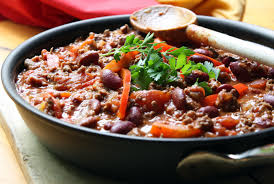
Great, great Granny has a famous chili recipe, which has 47 ingredients and requires 3 whole days of simmering, resting, and flavor-mingling in order to prepare it "just right." Even so, few have been able to give it that "special something" Granny always could.
So, to make it easier to manage, we "boil down" the recipe to the essentials: ground beef, tomato puree, beans, salt, and chili powder. We celebrate its simplicity, and we reason that this may actually be even BETTER than Granny's original recipe. After all, the myriad herbs and spices in the original recipe almost overwhelmed the simple chili flavor we expect. We can all better focus on the meat and the beans, which is the important stuff, without all those superfluous spices getting in the way. They were distractions, in fact.
So, we celebrate our new invention of Granny's chili, and we proudly serve it up at every get-together in remembrance of great-great-Granny. As this new chili recipe gets passed down, others add their own "relevant" flare: the kids like it with spaghetti noodles! Cheese is easier to add as a topping than minced cilantro! And who uses dried beans anymore when you can just pop open a can? All these changes create a continually morphed "Granny's chili" that - truth be told - looks nothing like the original recipe. That's ok, we tell ourselves. Granny's chili was more of a symbol, anyway. We're keeping the memory alive in our own way, which is what Granny would have wanted...
But let's think about this. Sure it's still chili, and sure we've kept all the basics, but is it the same thing as Granny's chili? Not even close. And if our goal is to truly honor and remember great-great-Granny and her amazing chili, then does "boiling down" her chili recipe help us do that? Not a chance.
I fear the only thing this altered chili recipe helps us do is to fill our own tummies - faster, more easily, and more in keeping with our own tastes. If that's the goal, then bravo! The new recipe is perfect. But if there is a higher goal in mind, we might want to reconsider boiling down the original recipe - lest we make so many alterations and substitutions that we find ourselves eating something else entirely.
Interestingly, the Eastern mindset out of which Orthodoxy came doesn't expect us to "get it" with our intellect, nor to "do it" perfectly, but to simply show up. To come to the table. To worship God.
But, unaccustomed to this "just come and see" viewpoint, we still tend to feel burdened by the pressure of "too much." It's too "high church" - too "ornate" - too complicated.
So, when a church says, "We stick with the simple truth - we've boiled it down so it's easy to understand without all the extras!" - Well, that feels really freeing.
But how much are we willing to give up in our pursuit of "boiled-down" truth? (And, how do we safeguard against "watering down" truth inadvertently?)
I like analogies. Consider this one:
Great, great Granny has a famous chili recipe, which has 47 ingredients and requires 3 whole days of simmering, resting, and flavor-mingling in order to prepare it "just right." Even so, few have been able to give it that "special something" Granny always could.
So, to make it easier to manage, we "boil down" the recipe to the essentials: ground beef, tomato puree, beans, salt, and chili powder. We celebrate its simplicity, and we reason that this may actually be even BETTER than Granny's original recipe. After all, the myriad herbs and spices in the original recipe almost overwhelmed the simple chili flavor we expect. We can all better focus on the meat and the beans, which is the important stuff, without all those superfluous spices getting in the way. They were distractions, in fact.
So, we celebrate our new invention of Granny's chili, and we proudly serve it up at every get-together in remembrance of great-great-Granny. As this new chili recipe gets passed down, others add their own "relevant" flare: the kids like it with spaghetti noodles! Cheese is easier to add as a topping than minced cilantro! And who uses dried beans anymore when you can just pop open a can? All these changes create a continually morphed "Granny's chili" that - truth be told - looks nothing like the original recipe. That's ok, we tell ourselves. Granny's chili was more of a symbol, anyway. We're keeping the memory alive in our own way, which is what Granny would have wanted...
But let's think about this. Sure it's still chili, and sure we've kept all the basics, but is it the same thing as Granny's chili? Not even close. And if our goal is to truly honor and remember great-great-Granny and her amazing chili, then does "boiling down" her chili recipe help us do that? Not a chance.
I fear the only thing this altered chili recipe helps us do is to fill our own tummies - faster, more easily, and more in keeping with our own tastes. If that's the goal, then bravo! The new recipe is perfect. But if there is a higher goal in mind, we might want to reconsider boiling down the original recipe - lest we make so many alterations and substitutions that we find ourselves eating something else entirely.
Sunday, June 1, 2014
What leads a Westerner to Orthodoxy?
I ran across a website that quickly outlines some "noteworthy" Protestants, including a brief description of the circumstances that led each one to convert to Orthodoxy. I just found it interesting, and thought I'd share.
Click HERE if you're interested!

Click HERE if you're interested!
Monday, May 19, 2014
Saint Chryse (Zlata) of Bulgaria
One of the cornerstone beliefs in my Christianity has always been a mistrust of any sort of elevation of Saints. They are just people - they should NOT be prayed to, must NOT be worshipped (which I thought was synonymous with praying to them), and in general, we shouldn't give them too much consideration.
Tonight I was randomly reading about St. Chryse (Zlata) of Bulgaria. (Don't ask me how I discovered her - it was really random. Ok, I'll tell you: I was looking for baby names!)

Zlata lived in the 18th century. In the year 1795, she was kidnapped by a Turkish man who was obsessed with her. He tried to seduce her and to get her to convert to Islam. She refused, so he changed his tactics and began threatening her. She still refused, so he tortured her - for months and months. Apparently, it became almost like a game of wills. Finally, after being enraged that he had been bested by a woman at this "game," he and some other men tied her to a tree and cut her to bits.
This woman's suffering was truly gruesome. She was beaten with clubs, strips of skin were pulled from her body, and a heated skewer was "passed through her ears." She was begged by her family to relent and simply deny Christ, "for the sake of appearances," but she refused.
My first thoughts when I read about this woman went something like this:
- Gosh, I really wish I had chosen a saint with a more uplifting story to read about.
- This is yucky - I'd like to start thinking about something else as soon as possible.
- Man I'm glad we're not at risk of being martyred these days.
- What kind of name is "Zlata" anyway - not a very good baby name.
But then, far weightier thoughts settled in:
- Wow. WOW. This woman and her sacrifice must be so prized by God. The angels must have sung her praises when she entered heaven. Perhaps it's not so crazy for us to honor her here on earth, too. If we want to become like Christ, perhaps we should strive to honor what He honors.
- What an EXAMPLE. Here I am, struggling to say "no" under so slight a temptation as sinful thoughts, slothful idleness, bitterness, selfishness....but she had to fight daily against the temptation to deny her Lord and save her physical body from such agony. What commitment. What resolve. What belief.
The more I think of her, the more I WANT to think of her - because she is becoming a source of strength to me. Her example is strengthening my resolve to cling to Christ no matter what, just as she did. Just as an inspiring older brother or sister in Christ (who is living) can be such an encouragement in my life, so these saints and martyrs can encourage and inspire and draw us closer to Christ.
And that, I'm thinking, is what it's all about. The stories of Saints help complete the picture of becoming Christlike, being themselves noteworthy members of the body of Christ.
Dwelling on the story of a Saint doesn't detract from the story of Christ, as I was taught. Instead, the blessed Saints help point the way to Christ. They are a beacon along the journey of life, illuminating more clearly what it looks like to follow God here on earth - in every century, on every continent, and in every life circumstance. Together, their stories echo throughout the centuries and proclaim the true God. (How very sad to have ignored this great choir of witnesses for so long!)
And as for worshiping them? That was a misunderstanding, or perhaps an over-reaction to perceptions of common Catholic practice in some places. Perhaps some people worshiped Saints or got too superstitious with their saintly icons or prayers. But the actual dogma of Orthodoxy describes prayer to a Saint as the same thing as petitioning a living friend to pray for us - except this "friend" is no longer living. And - oh yeah - they're enjoying communion with God, right now. If we truly believe in "the communion of saints," perhaps asking these experienced Christians for their prayers is not such a bad idea!
Tonight I was randomly reading about St. Chryse (Zlata) of Bulgaria. (Don't ask me how I discovered her - it was really random. Ok, I'll tell you: I was looking for baby names!)
Zlata lived in the 18th century. In the year 1795, she was kidnapped by a Turkish man who was obsessed with her. He tried to seduce her and to get her to convert to Islam. She refused, so he changed his tactics and began threatening her. She still refused, so he tortured her - for months and months. Apparently, it became almost like a game of wills. Finally, after being enraged that he had been bested by a woman at this "game," he and some other men tied her to a tree and cut her to bits.
This woman's suffering was truly gruesome. She was beaten with clubs, strips of skin were pulled from her body, and a heated skewer was "passed through her ears." She was begged by her family to relent and simply deny Christ, "for the sake of appearances," but she refused.
My first thoughts when I read about this woman went something like this:
- Gosh, I really wish I had chosen a saint with a more uplifting story to read about.
- This is yucky - I'd like to start thinking about something else as soon as possible.
- Man I'm glad we're not at risk of being martyred these days.
- What kind of name is "Zlata" anyway - not a very good baby name.
But then, far weightier thoughts settled in:
- Wow. WOW. This woman and her sacrifice must be so prized by God. The angels must have sung her praises when she entered heaven. Perhaps it's not so crazy for us to honor her here on earth, too. If we want to become like Christ, perhaps we should strive to honor what He honors.
- What an EXAMPLE. Here I am, struggling to say "no" under so slight a temptation as sinful thoughts, slothful idleness, bitterness, selfishness....but she had to fight daily against the temptation to deny her Lord and save her physical body from such agony. What commitment. What resolve. What belief.
The more I think of her, the more I WANT to think of her - because she is becoming a source of strength to me. Her example is strengthening my resolve to cling to Christ no matter what, just as she did. Just as an inspiring older brother or sister in Christ (who is living) can be such an encouragement in my life, so these saints and martyrs can encourage and inspire and draw us closer to Christ.
And that, I'm thinking, is what it's all about. The stories of Saints help complete the picture of becoming Christlike, being themselves noteworthy members of the body of Christ.
Dwelling on the story of a Saint doesn't detract from the story of Christ, as I was taught. Instead, the blessed Saints help point the way to Christ. They are a beacon along the journey of life, illuminating more clearly what it looks like to follow God here on earth - in every century, on every continent, and in every life circumstance. Together, their stories echo throughout the centuries and proclaim the true God. (How very sad to have ignored this great choir of witnesses for so long!)
And as for worshiping them? That was a misunderstanding, or perhaps an over-reaction to perceptions of common Catholic practice in some places. Perhaps some people worshiped Saints or got too superstitious with their saintly icons or prayers. But the actual dogma of Orthodoxy describes prayer to a Saint as the same thing as petitioning a living friend to pray for us - except this "friend" is no longer living. And - oh yeah - they're enjoying communion with God, right now. If we truly believe in "the communion of saints," perhaps asking these experienced Christians for their prayers is not such a bad idea!
Wednesday, May 14, 2014
Embracing Mystery
Western thinking is so deeply ingrained in us that, most of the time, we can't even identify the lens through which we see the world. We can't take this lens off our faces, examine it, and determine its validity - because to us, it simply is.
One such "norm" of Western thinking is a certain degree of rationalism. And from that rationalism, we feel an inborn need to make sure that whatever we do, whatever we say, and most importantly whatever we believe all stem from logical conclusions based on reasonable facts.
The way this translates into Christianity? The bridge diagram. Careful blueprints of various passages of scripture, picking apart each word to carefully define concepts like predestination, salvation, redemption - typically mapped out linearly on the page so that you can easily comprehend with your intellect every detail of the process. So that it provides a tight explanation. So that it makes SENSE.
Other things impacted by rationalism are simply the way we perceive the text. The way we understand basic concepts like indebtedness and forgiveness and repentance. These are all colored by our rationalist cultural indoctrination. It's not bad that we see life through this lens, but it'd be a mistake to ignore its influence. As we seek to understand the gospel, the only lens we have to look through is incredibly colored by our own imperceptible worldview.
Unless - we take the time to look through somebody else's lens.
Orthodoxy is very rational in that it does make sense - it's not all over the place like a crazy person made it up. But it's not rationalistic. That is, instead of placing a high premium on intellectual knowledge of any kind, Orthodoxy celebrates mystery.
God does not owe us any explanations, nor is he compelled to fit into our systems of understanding.
But that doesn't sit well with us, because of our conditioning to be rationalists. We want a system that explains, as fully as humanly possible, the gospel message. We want to know, most importantly, who is "in" and who is "out." We want to go to bed at night knowing that our system of theology has a long arm and a ready defense.
So, many of us stick with Calvinism. :)
Clark Carlton, former Baptist seminarian turned Orthodox, says that "you won't find a more beautiful system of theology than Calvinism." If you want a logical, thorough, clear-cut theological framework, Calvin's your guy. But, Carlton says, a system like Calvinism "puts a lid on God." It creates a careful framework which helps us feel more comfortable as we fluff our pillows at night, but it boxes God in. It adds a roof where there should be none, and perhaps more importantly, it creates a method of self-soothing for us as His creation - who should instead remain filled with awe and a healthy fear of God.
I think it might do us some good to step back and remember that God isn't caged by our perception of His reality. He can do literally anything he wants. But when I mention this concept to friends, I sometimes get the response, "Sure, God can do whatever he wants, naturally - but it's God who wrote the rules, so I don't think He'll go and change them." But if we look closely, we'll find that we're assuming our system is an accurate perception of "God's rules." What if it's lopsided? Or even worse, what if it's just plain wrong?
Orthodox faith "delineates the borders of the mystery." So, we know some things with certainty. We know that Jesus is the son of God. We know that other "gods" are NOT the same as the true God. And of course there are a host of other things we can know fully and for sure, and the Orthodox church will not waiver (and I mean they WILL NOT WAIVER) on any of these. But one cornerstone of the Orthodox understanding of God is an awe and reverence for the incomprehensible mystery that is the fullness of Him.
While Orthodox are committed beyond question to the truths that God has revealed, they at the same time refuse to define that which is beyond definition.
So - Who is in? Who is out? Only God knows with certainty. Lord, have mercy upon us.
In my soul, it makes sense to me that THIS is the God whom we serve. A God far too big, too mysterious, too dangerous, too consuming to ever comprehend or define or diagram. (All of a sudden, the practice of regular bowing seems to make a lot more sense, too - who wouldn't willingly bow to the ground under so weighty a presence?)
One such "norm" of Western thinking is a certain degree of rationalism. And from that rationalism, we feel an inborn need to make sure that whatever we do, whatever we say, and most importantly whatever we believe all stem from logical conclusions based on reasonable facts.
The way this translates into Christianity? The bridge diagram. Careful blueprints of various passages of scripture, picking apart each word to carefully define concepts like predestination, salvation, redemption - typically mapped out linearly on the page so that you can easily comprehend with your intellect every detail of the process. So that it provides a tight explanation. So that it makes SENSE.
Other things impacted by rationalism are simply the way we perceive the text. The way we understand basic concepts like indebtedness and forgiveness and repentance. These are all colored by our rationalist cultural indoctrination. It's not bad that we see life through this lens, but it'd be a mistake to ignore its influence. As we seek to understand the gospel, the only lens we have to look through is incredibly colored by our own imperceptible worldview.
Unless - we take the time to look through somebody else's lens.
Orthodoxy is very rational in that it does make sense - it's not all over the place like a crazy person made it up. But it's not rationalistic. That is, instead of placing a high premium on intellectual knowledge of any kind, Orthodoxy celebrates mystery.
In Orthodoxy and Heterodoxy, Father Damick writes, "Orthodox dogma never claims to expound the whole truth about anything, but only delineates the borders of the mystery."
God does not owe us any explanations, nor is he compelled to fit into our systems of understanding.
But that doesn't sit well with us, because of our conditioning to be rationalists. We want a system that explains, as fully as humanly possible, the gospel message. We want to know, most importantly, who is "in" and who is "out." We want to go to bed at night knowing that our system of theology has a long arm and a ready defense.
So, many of us stick with Calvinism. :)
Clark Carlton, former Baptist seminarian turned Orthodox, says that "you won't find a more beautiful system of theology than Calvinism." If you want a logical, thorough, clear-cut theological framework, Calvin's your guy. But, Carlton says, a system like Calvinism "puts a lid on God." It creates a careful framework which helps us feel more comfortable as we fluff our pillows at night, but it boxes God in. It adds a roof where there should be none, and perhaps more importantly, it creates a method of self-soothing for us as His creation - who should instead remain filled with awe and a healthy fear of God.
I think it might do us some good to step back and remember that God isn't caged by our perception of His reality. He can do literally anything he wants. But when I mention this concept to friends, I sometimes get the response, "Sure, God can do whatever he wants, naturally - but it's God who wrote the rules, so I don't think He'll go and change them." But if we look closely, we'll find that we're assuming our system is an accurate perception of "God's rules." What if it's lopsided? Or even worse, what if it's just plain wrong?
Orthodox faith "delineates the borders of the mystery." So, we know some things with certainty. We know that Jesus is the son of God. We know that other "gods" are NOT the same as the true God. And of course there are a host of other things we can know fully and for sure, and the Orthodox church will not waiver (and I mean they WILL NOT WAIVER) on any of these. But one cornerstone of the Orthodox understanding of God is an awe and reverence for the incomprehensible mystery that is the fullness of Him.
While Orthodox are committed beyond question to the truths that God has revealed, they at the same time refuse to define that which is beyond definition.
So - Who is in? Who is out? Only God knows with certainty. Lord, have mercy upon us.
In my soul, it makes sense to me that THIS is the God whom we serve. A God far too big, too mysterious, too dangerous, too consuming to ever comprehend or define or diagram. (All of a sudden, the practice of regular bowing seems to make a lot more sense, too - who wouldn't willingly bow to the ground under so weighty a presence?)
Subscribe to:
Posts (Atom)